Most guests never get as far as your website
Picture a cruise passenger in Dubrovnik with ninety minutes before the tender back to the ship. They are not going to browse. They type "seafood near me", see a cluster of pins around the Old Town and pick one. Whoever looks open, close and trustworthy wins the table.
Google says local results depend on three things: relevance, meaning how well a profile matches the search; distance from the person searching; and prominence, which is roughly how well known the business is. Distance is fixed. A konoba in Lapad will never be on the Stradun. The other two are very much in your hands.
One thing is not. Google states plainly that there is no way to request or pay for a better local ranking. Ads exist, but they are labelled as ads and live in a separate world.
Opening hours on Google Maps are where tables quietly disappear
The most expensive mistake on a restaurant profile is rarely a bad photo. It is opening hours that are wrong. A family walks fifteen minutes uphill because Google promised you were open until eleven, finds the shutters down at ten, and writes a one-star review about the walk rather than the food.
Set special hours for public holidays, for the winter timetable and for the week you finally take a break in November. According to Google, businesses with complete and accurate information are more likely to show up in local results. A correct phone number and real hours are not marketing tricks. They are good manners.
While you are in there, check your category. A pizzeria listed as a cafe will not appear when someone searches for pizza. Use your own photos too, of your own plates and your own terrace. Guests notice when the dish on the table looks nothing like the one on the screen.
Google reviews for restaurants: ask everyone, bribe no one
Google says more reviews and positive ratings can help local ranking, so wanting more of them is reasonable. The catch is how you get them. Google's content policy forbids offering anything in exchange for a review, whether that is a discount, a free dessert or the classic glass of house rakija. It also forbids discouraging negative reviews or asking only your happy guests.
What works within the rules is simple and slightly boring: ask every guest. A small QR card with the bill, a link in the reservation confirmation, or a waiter who says "if you enjoyed it, a review would help us". No reward, no filtering.
Then reply, including to the unfair ones. Your reply is not really for the person who complained. It is for the next hundred people reading it, and a calm two-line answer tells them more about your place than any five-star rave.
Your profile and your website should tell the same story
If Google Maps says you close at 23:00, your website says midnight and your Facebook page still shows last summer's hours, guests do not know whom to believe and neither does Google. Keep the name, address, phone and hours identical everywhere.
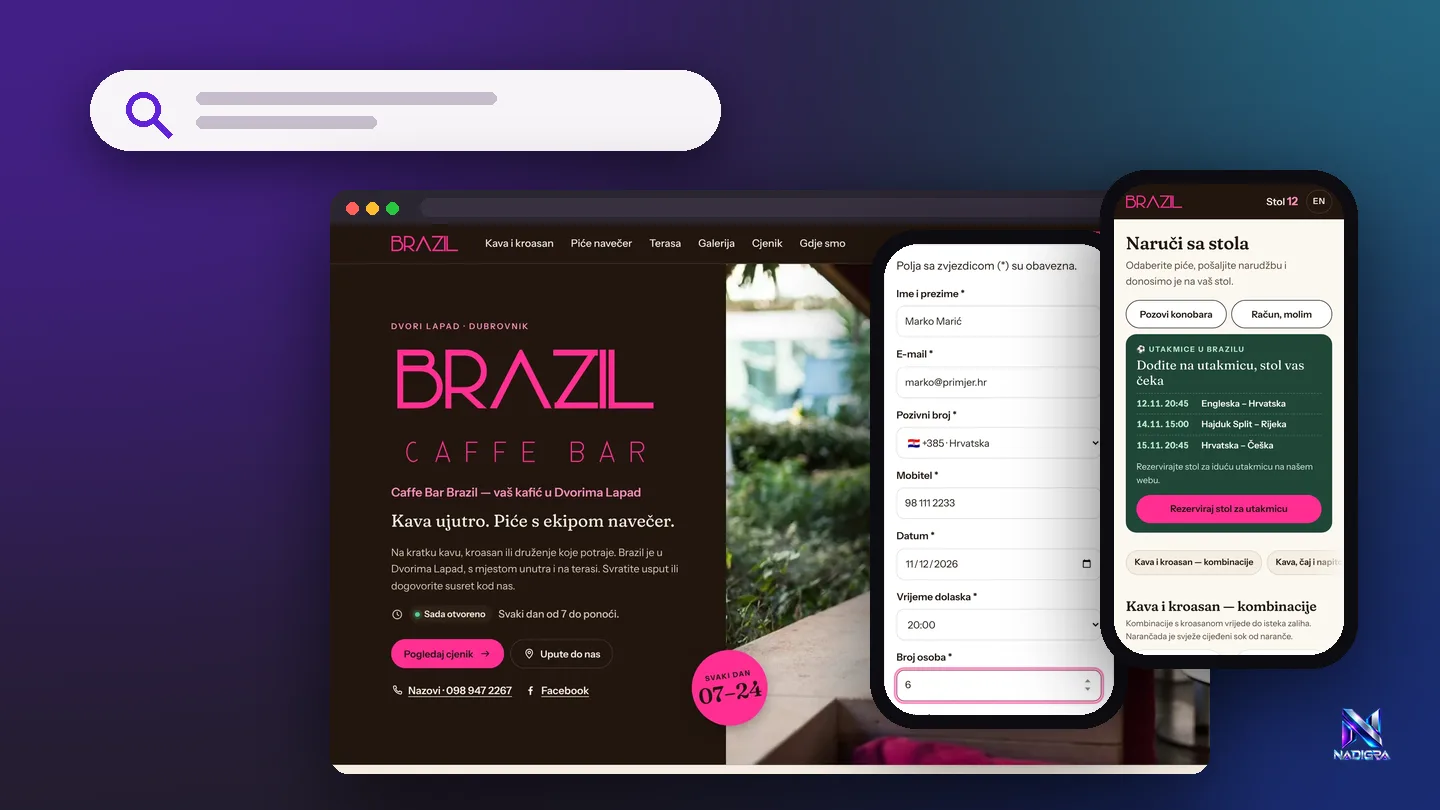
The profile gets attention, the website closes the deal. Link the profile to a page where people can see the menu with prices and book a table for six, not to a homepage that still says "new site coming soon".
What guests look for on a restaurant websiteWho keeps it updated in August?
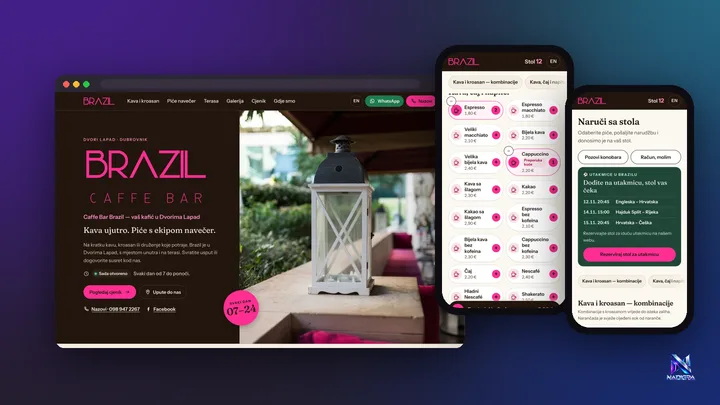
Nobody running a busy terrace in peak season is updating Google hours at midnight. That is why a Google Business Profile is part of every NADIGRA package for cafes and restaurants. We set it up and maintain it, from categories and description to hours, photos and posts, and we reply to reviews where agreed. The packages are Start at €69, System at €125 and System with delivery at €179 per month, each with a website, QR menu, reservations and SEO included.
What we do not promise is a position on the map. Google decides that, and anyone guaranteeing you first place is selling something that is not theirs to sell.
Packages for cafes and restaurantsGoogle Business Profile setup